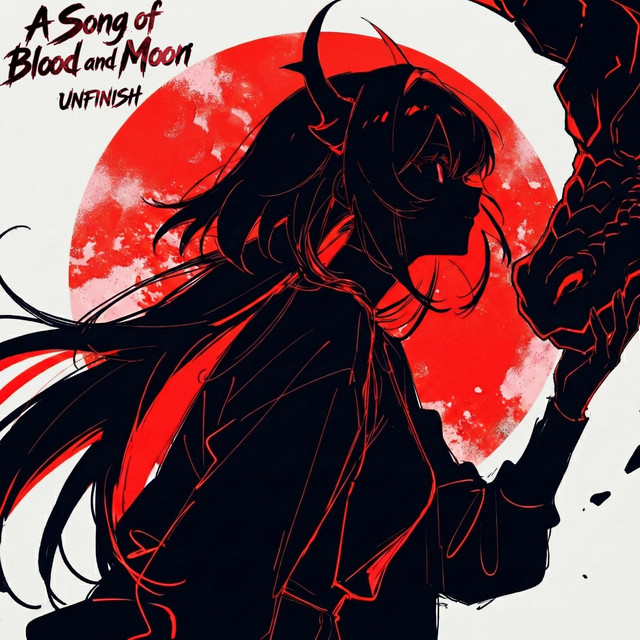
Behind 'A Song of Blood and Moon': Writing Darkness in a Major Key
February 26, 2026· 6 min read· 170 views
The easiest way to write a dark track is to stay in minor keys, slow the tempo, and let the production signal its mood through every available channel. It works. It's predictable, but it works. Listeners know immediately what they're getting, and the emotional register is clear from the first few seconds.
A Song of Blood and Moon was an attempt to do the opposite — to write something that sounds expansive, even uplifting in places, while carrying something much heavier underneath. The tension between the surface and what's beneath it is the whole point. Some of the most unsettling things you encounter in life arrive wearing bright colors.
The Contradiction at the Center
"Blood and moon" as imagery is maximalist in a specific way. Both are ancient, both carry weight across virtually every culture and tradition that's ever thought about them. Blood as life force and violence simultaneously. The moon as something constant and beautiful that governs tides, madness, cycles — things that operate outside human control. Put them together and you have something that sounds mythological without being specific enough to belong to any single mythology.
That deliberate vagueness was important. I didn't want the track to be pinned to one narrative or one tradition. I wanted the imagery to function the way it does in dreams — present, meaningful, heavy with significance you can't quite articulate.
The major key was a production choice that came out of that ambiguity. If the images themselves carry the weight, the music doesn't have to signal the darkness through conventional means. It can be something else — something that expands rather than compresses. The contrast between what you're hearing and what you're feeling became the mechanism of the track.
The Production Challenge: Hiding the Weight
Making something feel heavy without the obvious sonic markers of heaviness is harder than it sounds. Darkness in music is usually conveyed through a fairly consistent toolkit: minor keys, lower tempos, thinner arrangements, longer reverb tails, space and restraint. All of those are valid tools and they work. The problem is that they announce themselves. You know what you're getting into from the first bar.
For Blood and Moon, I wanted to subvert that expectation. The arrangement is fuller than most things I produce — layered, with more movement happening simultaneously than I usually allow. The tempo sits in a range that reads as energetic rather than brooding. The melodic material, taken out of context, would sound triumphant.

The weight comes from what's underneath: specific harmonic choices within the major key that introduce tension without resolving it, rhythmic elements that subtly undercut the momentum, and a low-frequency layer that you feel more than you hear — present mostly as physical sensation rather than something you'd identify in the mix if asked to list the elements.
The goal was for the track to leave you with a feeling you couldn't immediately explain. You heard something bright and large. But something underneath it didn't quite let you settle.
The Moon Section
There's a breakdown in the track that I think of internally as "the moon section," though nothing in the released version indicates this. It's the point where the full arrangement drops away and leaves space — just a few elements, a lot of air, and the melodic line exposed.
That exposure was uncomfortable to commit to. Stripped of the surrounding production, the vulnerability of the melodic material becomes visible in a way that the fuller arrangement masks. It's easier to hide in density. A section that goes sparse is a section that makes a claim: this thing, alone, is worth hearing.
I sat with that section for a long time before deciding it was. The sparse version earned its place because it changes the character of everything that comes after it — the return of the full arrangement carries different weight once you've heard what's underneath it. Without the stripped section, the track is just large. With it, it becomes something that knows its own interior.
What "Blood and Moon" Is Actually About
I'm deliberately vague about this in public because I think the track works better if listeners bring their own content to it. Mythological imagery at that scale tends to be most resonant when it's personal — when it maps onto something specific to the person hearing it rather than something specific to the person who made it.
What I'll say: it's about the kind of grief that doesn't look like grief from the outside. The kind that presents as something else — as drive, as action, as fullness — while operating as something heavier underneath. The major key is that presentation. What's below it is something I'm not going to name, because naming it would make it smaller than it is.

The track earned its title because blood and the moon are both things that cycle, that return, that are permanent fixtures of human experience without anyone asking them to be. They don't need permission. They don't resolve. They just keep happening.
Listen Now
Spotify · Apple Music · YouTube Music
FAQ
Why is "A Song of Blood and Moon" in a major key if it's about dark themes?
The major key was a deliberate compositional choice to create tension between surface and depth. Conventional dark music announces its mood through minor keys and slower tempos — the darkness is legible from the first bar. Blood and Moon attempts something different: something that sounds expansive and even triumphant while carrying something heavier underneath. The contrast between what you hear and what you feel is the mechanism of the track.
What does the imagery of "blood and moon" refer to?
Deliberately left open. Both blood and the moon carry weight across virtually every culture and tradition — blood as life force and violence simultaneously, the moon as something constant and beautiful that governs cycles outside human control. The imagery was chosen to function like dream logic: present, meaningful, heavy with significance you can't fully articulate. Pinning it to a specific narrative would make it smaller than it is.
What is the "moon section" in the track?
There's a breakdown where the full arrangement drops away and leaves just a few elements exposed — the melodic line without the production surrounding it. It's the most vulnerable moment in the track. Its purpose is structural: once you've heard what's underneath the full arrangement, the return of the full production carries different weight. Without it, the track is just large. With it, it becomes something that knows its own interior.
Is there a specific meaning or personal context behind the track?
Yes, but it's deliberately withheld from public description. The general register: grief that doesn't present as grief from the outside. The kind that appears as drive, fullness, or action while operating as something heavier underneath. The major key is the surface presentation. Naming what's below it in specific terms would make it smaller than it is, and less useful to listeners who bring their own experience to the imagery.
Related Posts

Behind 'Cold Summer': What a Season Feels Like When It's the Wrong Temperature
Mar 8, 2026

Behind 'Spellbound': What It Means to Make Something Hypnotic
Mar 5, 2026

Behind 'Heavy Hitter': Making Something That Hits Without Trying to Hit
Mar 5, 2026
Behind 'HiJinK 2': Why Sequels Are a Bad Idea (And Why I Made One Anyway)
Mar 1, 2026
Sign in to leave a comment
Loading...