
Behind 'Arcade of Us': A Coin, a Stranger, and Two Melodies That Weren't Supposed to Fit
February 26, 2026· 6 min read· 172 views
There's a specific moment that happens in old arcades that doesn't happen anywhere else. You're at a cabinet, you put in your coin, you're committed. And then someone walks up and slides into the 2P slot without asking. No introduction. No negotiation. You just start playing together.
That moment — the instant sync, the unspoken agreement, the shared thing that requires no explanation — is what Arcade of Us is about. I've been trying to write that feeling into a track for years. This is the one that actually got there.
The Namba Recording Session Nobody Was Supposed to See
There's a sample in the drop of Arcade of Us. A real one. It's the sound of an arcade machine accepting a coin — the particular mechanical clunk and chime that every retro cabinet makes right before the game starts.
I recorded it at a retro gaming bar in Namba, Osaka. Not the most dignified process — I was crouched next to a Pac-Man cabinet with my phone, feeding coins in repeatedly to capture the cleanest recording I could get. The owner of the bar watched me do this for about fifteen minutes before deciding it was too weird to ignore and asking what I was doing.
I explained. He seemed skeptical. I bought enough drinks that he stopped being skeptical.
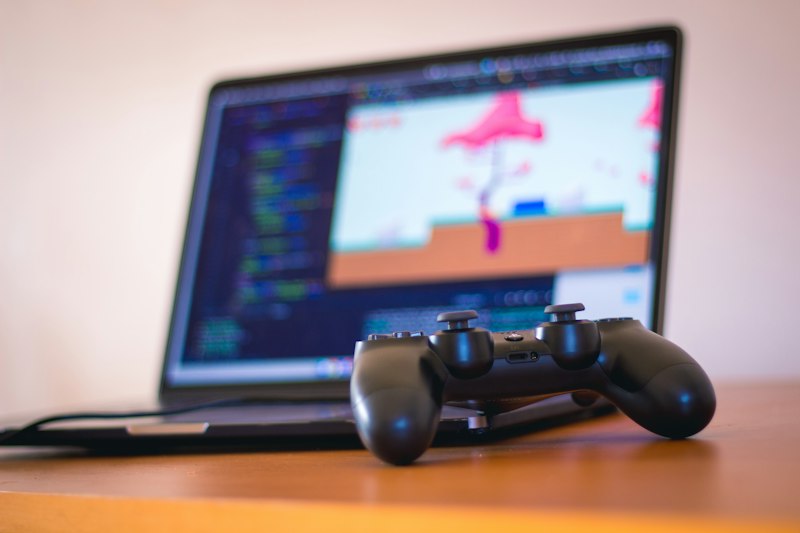
The coin sample doesn't announce itself in the track. It's layered and processed — by the time it appears in the mix it doesn't read as "here is a sample of a coin" so much as "here is the texture of that specific moment when something is about to begin." That's what I was after. Not nostalgia as costume. Nostalgia as emotional residue embedded in the sound itself.
The Chiptune Problem
Yes, there are 8-bit sounds in this track. I'm aware that's been done. I was skeptical of it myself for most of the production period, which is why the chiptune elements ended up so deep in the mix. They're there, but they're not front and center — they sit under layers of modern synthesis, barely visible, more like something you half-hear than something you're meant to notice.
That positioning was intentional. The track isn't about nostalgia as a primary subject. It's not a retro aesthetic piece. The 8-bit sounds are a memory the production is carrying, not a costume it's wearing. When you can almost hear something but not quite — when it's present but not legible — it works on you differently than when it's the obvious point. It became a background hum of recognition, not a statement.

I spent longer on the frequency balance of those chiptune elements than on almost anything else in the track. Too loud and the whole thing becomes a gimmick. Too quiet and you've gone through the effort of writing them for nothing. The target was: present on close listening, invisible on casual listening. I think it landed close to that.
The Structural Gamble
The structure of Arcade of Us is the thing I'm most uncertain about and most attached to at the same time.
The first half of the track has a main melodic idea. The second half introduces a completely different one. In conventional terms, the second melody should be a development or variation of the first — you establish a theme, you evolve it, the listener follows you. That's how most music is structured because it works: it gives people a thread to hold onto.
Arcade of Us doesn't do that. The second melody doesn't replace or develop the first. In the final section, they play simultaneously — two entirely distinct melodies, neither designed with the other in mind, suddenly occupying the same space.

On paper this sounds like chaos. In practice it either works or it doesn't, and whether it works depends entirely on whether you happened to find each other in the right key at the right moment. I wrote the two melodies separately, months apart, before I had any plan to combine them. When I laid them together to see what happened, they worked. They weren't supposed to. They just did.
That accidental fit — the 2P moment in the production itself — became the thematic spine of the track. Two things that weren't made for each other, arriving at the same place at the same time, and something unexpected emerging from the overlap.
Who This Track Is For
Not everyone who plays a game together becomes friends. The arcade 2P moment I keep coming back to is specifically the anonymous version — no names exchanged, no social continuity beyond the session, just the shared focus of the game and then you each go your separate way. Two players, one run, no follow-up.
There's something genuinely rare about that kind of connection. Completely in the present, completely without obligation. You built something together, even if "something" was just getting to the final boss. Then it's over. It doesn't need to be more than what it was.
Most of what we make with other people doesn't last and isn't supposed to. Arcade of Us is for that version — the people you played a level with once and never saw again. The strangers you were briefly in perfect sync with. The connections that were real and didn't need to continue to have mattered.
Listen Now
Spotify · Apple Music · YouTube Music
FAQ
What is "Arcade of Us" about?
The track is built around the feeling of anonymous cooperative play in old-school arcades — when a stranger slides into the 2P slot without asking and you clear the game together without exchanging names. It's about connection that's real and complete without needing to continue. The production carries that theme: two melodies written months apart that weren't designed to fit each other, and do anyway.
Is there a real sample in the track?
Yes. The coin insert sound in the drop is a real recording made at a retro gaming bar in Namba, Osaka. It's heavily processed and layered in the mix rather than presented as an obvious sample — it functions as textural residue rather than a nostalgia cue.
Why are the chiptune sounds so buried in the mix?
The track isn't a retro aesthetic piece. The 8-bit sounds are emotional memory embedded in the production, not a costume. Positioning them deep in the mix — present on close listening, invisible on casual listening — was the way to get them to function as texture rather than statement. Too loud and it becomes a gimmick. The goal was: you half-hear them, and something in you recognizes what they are without being told.
How do two different melodies work simultaneously in the second half?
They were written months apart, and the combination wasn't planned. When the two were layered to test compatibility, they happened to land in a way that worked — different enough to be distinct, close enough harmonically that they coexist without friction. The accidental nature of the fit became part of the theme: the 2P moment recreated inside the production itself.
Where was Arcade of Us recorded?
Production was done primarily in Osaka, Japan. The coin sample was recorded on-location at a retro gaming bar in Namba. UNFINISH is based in Osaka.
Related Posts
Behind 'Cold Summer': What a Season Feels Like When It's the Wrong Temperature
Mar 8, 2026

Behind 'Spellbound': What It Means to Make Something Hypnotic
Mar 5, 2026
Behind 'Heavy Hitter': Making Something That Hits Without Trying to Hit
Mar 5, 2026
Behind 'HiJinK 2': Why Sequels Are a Bad Idea (And Why I Made One Anyway)
Mar 1, 2026
Sign in to leave a comment
Loading...